
How a Heat Pump Moves Heat Through Your Home
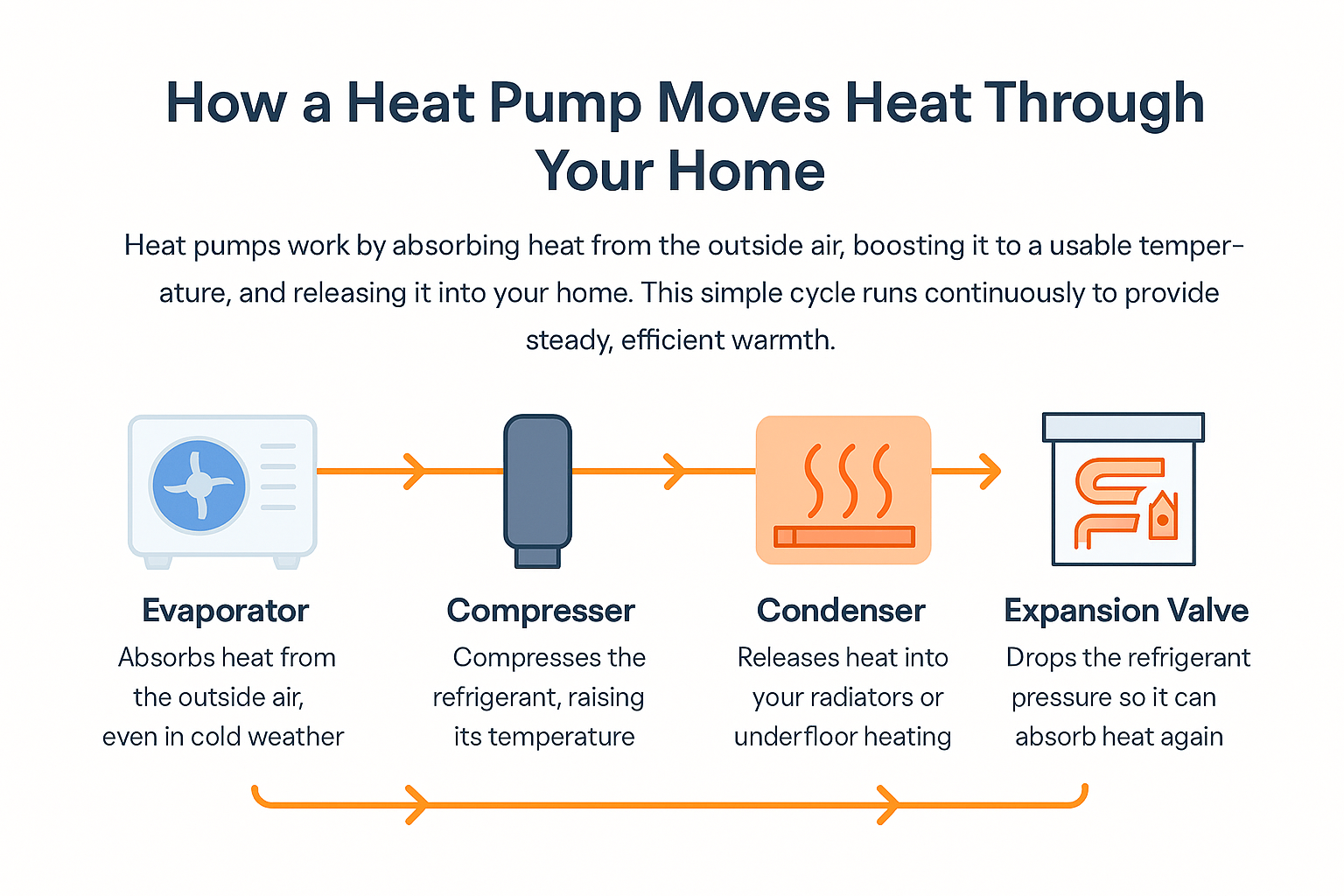
Heat pumps work by absorbing heat from the outside air, boosting it to a usable temperature, and releasing it into your home. This simple cycle runs continuously to provide steady, efficient warmth.
The Four-Step Cycle

Evaporator
Absorbs heat from the outside air, even in cold weather.

Compressor
Compresses the refrigerant, raising its temperature.

Condenser
Releases heat into your radiators or underfloor heating.

Expansion Valve
Drops the refrigerant pressure so it can absorb heat again.
Efficiency Explained Simply
Heat pumps are efficient because they move heat rather than generate it. A typical air-source heat pump might have a Coefficient of Performance (COP) of 3:
- 1 unit of electricity in → 3 units of heat out
This means lower running costs and better energy use compared to traditional boilers.
What This Means for Your Home
- Steady, low-temperature heating feels more consistent than on-off boiler cycles.
- Radiators may feel cooler to the touch, but your home stays warm.
- Works best with good insulation and larger radiators or underfloor heating.
Visual Diagram
Why This Matters
Understanding the heat pump cycle helps homeowners:
- Feel confident about how the system works
- Understand why heat pumps are efficient
- Know what to expect in terms of comfort and performance